
Norman Flood Cleanup
Sudden severe thunderstorms frequently cause flash runoff that overwhelms perimeter foundation grading and enters ground-level slab homes. Overland floodwaters are classified as Category 3 black water, requiring the removal and disposal of all submerged carpet, pad, and drywall up to several inches above the water line. Our emergency team responds immediately with industrial extraction equipment to secure your home.
Call (405) 555-0167 for an open roof or active flooding.
Prefer to talk? (405) 555-0167
Dedicated Storm Restoration Specialists
With 55,346 housing units on record in the Census ACS 5-year estimates across our coverage area, our team understands the structural demands of local properties.
The median owner-occupied home here was built in 1988, meaning aging building assemblies often encounter storm runoff during severe weather.
Sandy soils make up roughly 28% of the top mapped acreage locally, including Harrah fine sandy loam on 5 to 8 percent slopes, which drains quickly and shifts the local problem from heave toward water movement and erosion.
Homeowners often describe how torrential rainfall rapidly overwhelms drainage along Indian Hills Road and 48th Ave in the northwest section, creating severe flash flooding risks for surrounding residential properties.
We provide comprehensive water damage restoration solutions for local properties to ensure standing moisture is extracted before secondary decay sets in.
Every project receives meticulous moisture mapping, containment barriers, and thorough cleanup to return living spaces to safe, sanitary conditions.
How We Remediate Indoor Flood Emergencies
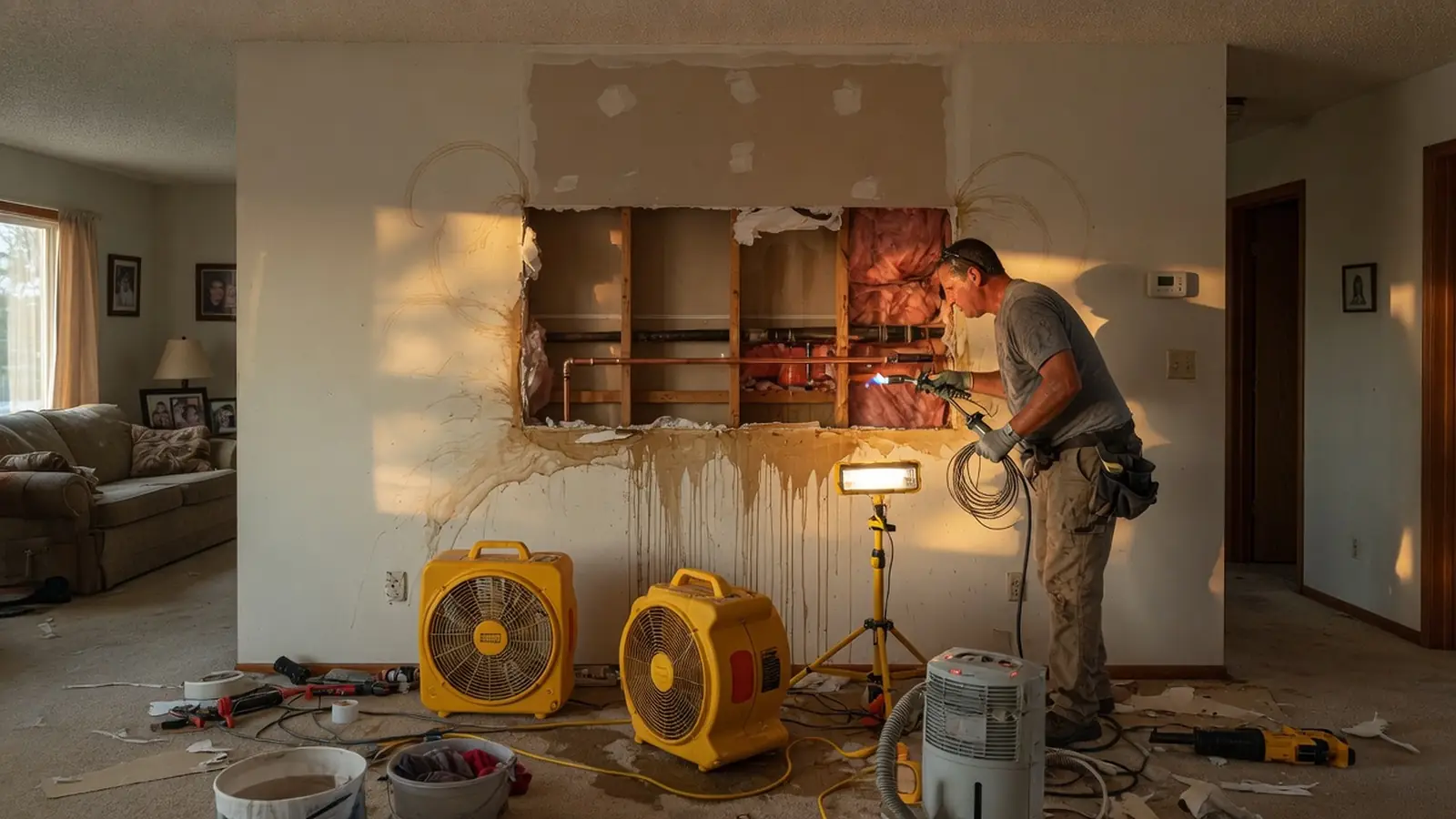
Public discussions frequently emphasize that standing water in crawlspaces after severe weather requires rapid extraction, removal of saturated insulation, and mechanical framing dry-down to halt deterioration. We follow strict remediation guidelines to systematically stabilize, sanitize, and dry every compromised structure.
- Emergency Extraction & Containment. We deploy truck-mounted extractors immediately for mitigating structural storm damage after flash flooding. Technicians remove standing water from concrete slabs and subterranean subfloors while establishing negative pressure zones to halt contaminant transfer.
- Controlled Flood Cuts & Disposal. After indoor flooding events, property owners need guidance on appropriate flood-cut heights for waterlogged drywall and effective antimicrobial frame treatments. Our technicians remove porous drywall and insulation at least twelve inches above the moisture line, disposing of unsalvageable Category 3 materials under controlled containment.
- Structural Cavity Drying. Relying on DIY surface extraction after indoor flooding often leaves hidden moisture trapped within wall cavities, accelerating concealed mold colonization. We position high-velocity air movers and commercial desiccant dehumidifiers directly into wall framing to pull out deep saturation.
- Antimicrobial Treatment & Verification. All exposed framing members receive EPA-registered botanical antimicrobial washes to prevent fungal development. We complete thermal imaging and moisture meter verifications across all framing studs before clearing the site for reconstruction.
Strict Industry Standards For Every Flood Recovery
We adhere to strict IICRC S500 restoration standards on every flood project, treating structural framing with hospital-grade botanicals and verifying moisture content with calibrated pin meters. If microbial growth is identified behind baseboards during tear-out, our technicians initiate a professional mold remediation protocol to protect indoor air quality before closing wall assemblies. We never cut corners by leaving damp insulation or undocumented wet studs in place.
Overland Black Water Extraction
Our high-capacity truck units quickly pump out contaminated surface runoff from ground-level living areas. We remove saturated carpets, dispose of damaged base materials, and decontaminate raw concrete subfloors.
Controlled Wall Demolition & Flood Cuts
Technicians make precise horizontal flood cuts above water lines to expose wall framing. Saturated fiberglass batts are discarded, and studs are washed with registered antimicrobials to eliminate hidden contamination.
Structural Cavity Dehumidification
Industrial low-grain refrigerant dehumidifiers and axial air movers extract bound moisture from sill plates and subfloors. Continuous psychrometric monitoring confirms framing reaches safe equilibrium moisture content.
Dedicated To Complete Structural Restoration
Our remediation approach relies on objective psychrometric readings, thermal imaging, and disciplined hygiene procedures. We evaluate every residential structure thoroughly, ensuring all compromised building materials are safely removed and dried to verifiable standards.
- 10Zip Codes Served
- 4Service Areas
- 3Services Offered
Homeowners across our service area share their firsthand experiences following emergency storm water extraction and structural dry-down services.
“Six months after storm runoff invaded our ground floor, there is zero musty odor and our new baseboards sit perfectly flush against the dry studs. The crew ran desiccant dehumidifiers for four solid days until moisture meters confirmed the sill plates were completely dry. Living through that mess was stressful, but their thorough work kept mold from ever developing in our walls.”
Marcus T.
“Our subdivision association has incredibly strict rules regarding commercial disposal dumpsters and street parking for service trailers. The crew parked their extraction rig entirely within our driveway and loaded out flood-cut drywall directly into an enclosed hauler before anyone could complain. Several neighbors actually asked for their contact card after seeing how tidy they kept our front curb throughout the cleanup.”
Brenda K.
“When water rushed into the rear hallway, my elderly father was resting in the adjacent bedroom and could not easily navigate around heavy equipment. The crew thoughtfully routed all vacuum lines through an alternate side exit and set up containment plastic so his living area stayed quiet, warm, and free of dust. Their gentle consideration for our family routine during a chaotic situation meant the world to us.”
Darren S.
“Another contractor gave us a cheap quote that only covered wet vacuuming the carpet surface and running a couple of household fans. This company took the time to show us elevated moisture levels behind the baseboards, explaining why black water required removing the soaked drywall up to two feet. Paying for proper flood cuts and antimicrobial washing saved us thousands in hidden rot down the road.”
Elena R.
Frequently Asked Questions
How quickly must flood cleanup begin after overland storm runoff enters a home?
Professional flood cleanup should begin within twenty-four hours to stop Category 3 black water from triggering irreversible microbial decay. Prompt extraction and rapid demolition of wet drywall prevent moisture from migrating deeper into wall cavities and structural framing.
Can baseboards and submerged hardwood floors be dried and saved after overland storm water enters the home?
Submerged baseboards and hardwoods exposed to overland storm water rarely survive Category 3 contamination and usually require complete removal. Because surface runoff introduces outside contaminants, silt, and microbes, porous wood warps quickly and seals hazardous moisture against the subfloor.
What determines the proper flood-cut height on water-damaged interior drywall?
Technicians make horizontal flood cuts at least twelve to twenty-four inches above the highest visible water mark to expose damp wall cavities. Wicking action draws moisture above the flood line, so cutting above the visible water line ensures all saturated gypsum and batting are discarded.
How long does the structural drying process take following an indoor flood?
Complete structural drying typically requires three to five days of continuous operation with industrial dehumidifiers and axial air movers. Daily moisture readings determine when wooden wall plates and concrete subfloors reach dry baseline standards before reconstruction starts.
Will homeowner insurance cover cleanup for water entering from outside during severe storms?
Standard home policies usually exclude overland runoff, requiring a specialized flood insurance policy under the NFIP to cover water cleanup. Our office documents all moisture migration and disposal logs with comprehensive photographic evidence to streamline claims with your adjuster.