
Norman Mold Remediation
Central Oklahoma's humid summer climate allows hidden mold colonies to colonize damp wall cavities within 24 to 48 hours following an unresolved plumbing leak or storm intrusion. Our certified technicians isolate active microbial growth and restore safe indoor air quality. We respond rapidly with professional containment and targeted remediation.
Call (405) 555-0167 if water is standing right now.
Prefer to talk? (405) 555-0167
Precision Containment And Air Quality Restoration
About 33% of housing units locally (18,024 of 55,346) were built since 2000, so a substantial share of the local stock is still on its original systems.
Severe 90 mph straight-line storm winds topple mature trees and splinter limbs adjacent to homes, threatening roof integrity and creating immediate water entry pathways.
Waiting 3 to 4 days for utility restoration before starting storm cleanup risks severe secondary moisture damage, requiring independent power generation for drying equipment.
Property owners dealing with saturated structures can schedule comprehensive water damage restoration to stabilize building materials before fungal colonies expand.
Every project undergoes systematic moisture mapping and calibrated cavity probing before physical teardown commences.
Step-by-Step Remediation Process
We follow strict engineering controls to safely isolate, remove, and verify fungal cleanup without contaminating living areas.
- Environmental Assessment & Moisture Mapping. Homeowners recovering from moisture incidents seek impartial mold testing to confirm actual contamination levels without risk of inflated remediation scopes. As a pattern echoed in public discussions, verified diagnostic sampling prevents unnecessary demolition while identifying genuine hazards. We collect thermal imaging and moisture readings across all affected building assemblies.
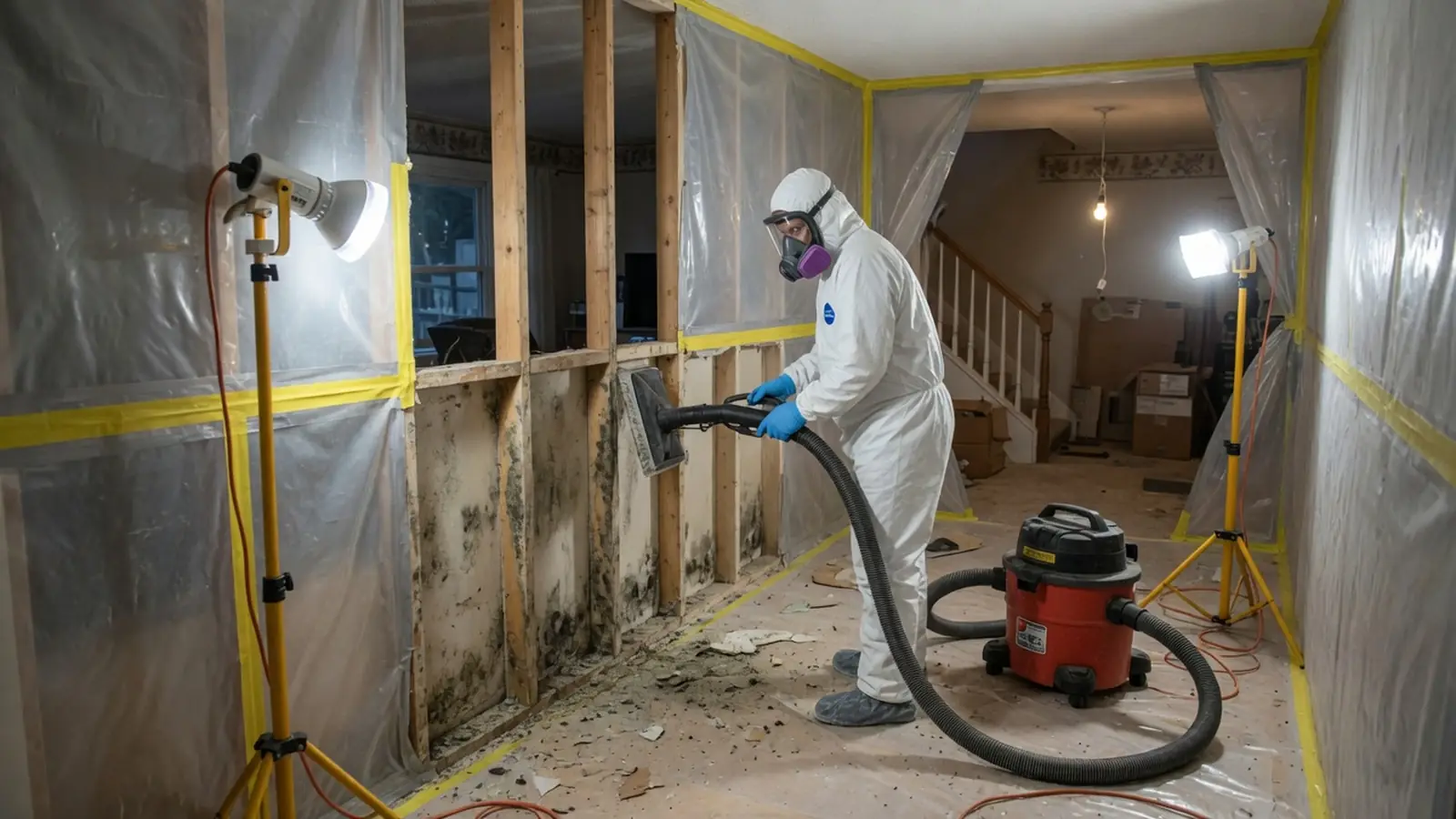
- Negative Air Containment Setup. Remediation requires physical polyethylene barriers and negative air machines with HEPA filtration to prevent spores from cross-contaminating unaffected rooms during teardown. Technicians seal doorways, HVAC returns, and register vents using heavy poly sheeting. Continuous negative air exhaust vents safely outside the building envelope.
- Controlled Removal & Flood Cuts. After indoor flooding events, property owners need guidance on appropriate flood-cut heights for waterlogged drywall and effective antimicrobial frame treatments. Our technicians execute precise cuts at least twelve to twenty-four inches above the moisture line to expose framing. Homeowners can review our professional flood cleanup procedures to see how structural framing is sanitized and dried.
- HEPA Vacuuming & Antimicrobial Treatment. Technicians vacuum all exposed studs and subflooring using commercial HEPA units before applying EPA-registered botanical antimicrobials. High-velocity air movers and commercial dehumidifiers run until structural lumber achieves dry standard equilibrium.
Our Iron-Clad Remediation Standard
Ceiling drywall saturation and secondary microbial growth following storm-related roof breaches leave homeowners needing clear protocols for containment and teardown. As homeowners often describe during severe weather recovery, getting immediate structural stabilization is critical. If tree impacts have punctured your roof decking, you can learn how our technicians stabilize emergency storm damage to prevent moisture from settling inside wall cavities. We strictly adhere to industry containment guidelines so non-impacted living areas stay clean.
Air Testing & Spore Diagnostics
Residents dealing with recurring moisture intrusion frequently seek objective air testing to verify whether unseen mold has taken hold. We utilize calibrated cavity probes and ambient spore traps to measure environmental loads. These diagnostics deliver clear baseline data before any physical remediation begins.
Porous Wallboard Remediation
Property owners frequently ask why is spraying bleach on drywall insufficient to kill mold roots embedded inside porous wallboard? Bleach only affects surface pigmentation while water penetrates deeper, allowing underlying hyphae to thrive. Complete physical removal of compromised sheetrock remains the only reliable solution.
Structural Antimicrobial Treatment
Following physical demolition, exposed wooden studs and sill plates receive deep antimicrobial scrubbing. We apply commercial fungicidal treatments that penetrate timber grain to prevent future fungal colonization. Continuous desiccant drying brings wood moisture content below fourteen percent.
Our Commitment To Verified Clean Air
We bring methodical inspection standards and containment protocols to every microbial cleanup project. Our focus remains on transparent assessments, proper negative air engineering, and verifiable structural drying.
- 10Zip Codes Served
- 6Service Areas
- 3Services Offered
Local property owners rely on our certified technicians when moisture incidents threaten indoor air quality. Read firsthand experiences from homeowners who trusted our team to isolate, remediate, and verify safe conditions in their properties.
“While tearing out the damaged drywall behind my laundry room, the technicians uncovered an old hidden leak inside the adjacent stud cavity. Instead of escalating the situation, the crew simply showed me the moisture meter readings and adjusted their drying plan without any fuss. They had the extra framing completely sanitized and dry two days later.”
Marcus T.
“Our home sale inspection flagged elevated mold counts in the crawlspace just five days before our scheduled closing date. The crew set up containment within hours and ran commercial air scrubbers non-stop to clear the spore levels. Thanks to their fast turnaround, our clearance test passed on schedule and closing went through without a hitch.”
Elena R.
“Another outfit had previously torn out our bathroom ceiling and left contaminated insulation exposed without any plastic barriers or HEPA filtration. This company came in, sealed off the hallway immediately, and cleaned up the airborne mess the first contractor left behind. They restored our home safely and finally gave us complete peace of mind.”
Derek B.
“Every scope item was itemized line by line before any demolition started, so I knew precisely what the containment and removal would cost. When the job wrapped up, the final invoice matched their original estimate down to the exact penny. Finding a crew that stands firmly by their quote without surprise fees was refreshing.”
Sarah K.
Frequently Asked Questions
Why is spraying bleach on drywall insufficient to kill mold roots embedded inside porous wallboard?
Bleach cannot penetrate porous materials, leaving fungal hyphae alive inside wallboard to regenerate as soon as humidity rises again. Chlorine bleach only alters surface discoloration on non-porous assemblies, requiring physical sheetrock removal for lasting remediation.
How do technicians prevent airborne spores from spreading to clean rooms during remediation?
Crews establish sealed polyethylene barriers and use HEPA-filtered negative air machines to direct airborne particles outside safely. Continuous negative pressure ensures air only travels inward toward the containment zone rather than escaping into unaffected living areas.
How quickly does mold develop inside damp wall cavities after a moisture incident?
Colonies begin colonizing damp wall cavities within 24 to 48 hours following an unresolved plumbing leak or humid weather intrusion. Warm ambient temperatures and trapped humidity accelerate spore germination, making immediate professional containment and extraction vital.
When should property owners order objective air testing during the remediation process?
Testing is recommended before remediation to define baseline spore counts and after remediation to objectively verify clean clearance. Independent diagnostic sampling confirms actual contamination levels without bias and ensures safety before containment barriers are removed.
What factors determine the total cost of professional residential mold remediation?
Overall costs depend on total square footage affected, containment requirements, structural tear-out volume, and drying duration. Targeted containment around small plumbing leaks requires fewer filtration hours than extensive storm-related ceiling teardowns.